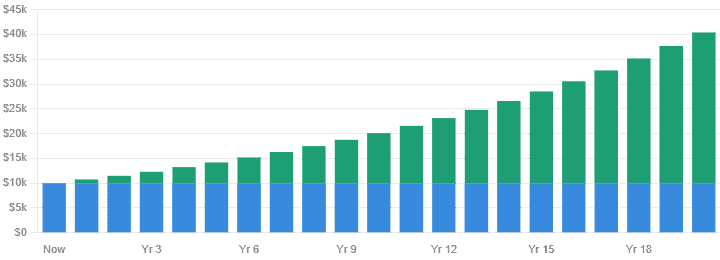
Here’s the interactive breakdown — drag any slider to see compound interest in action.
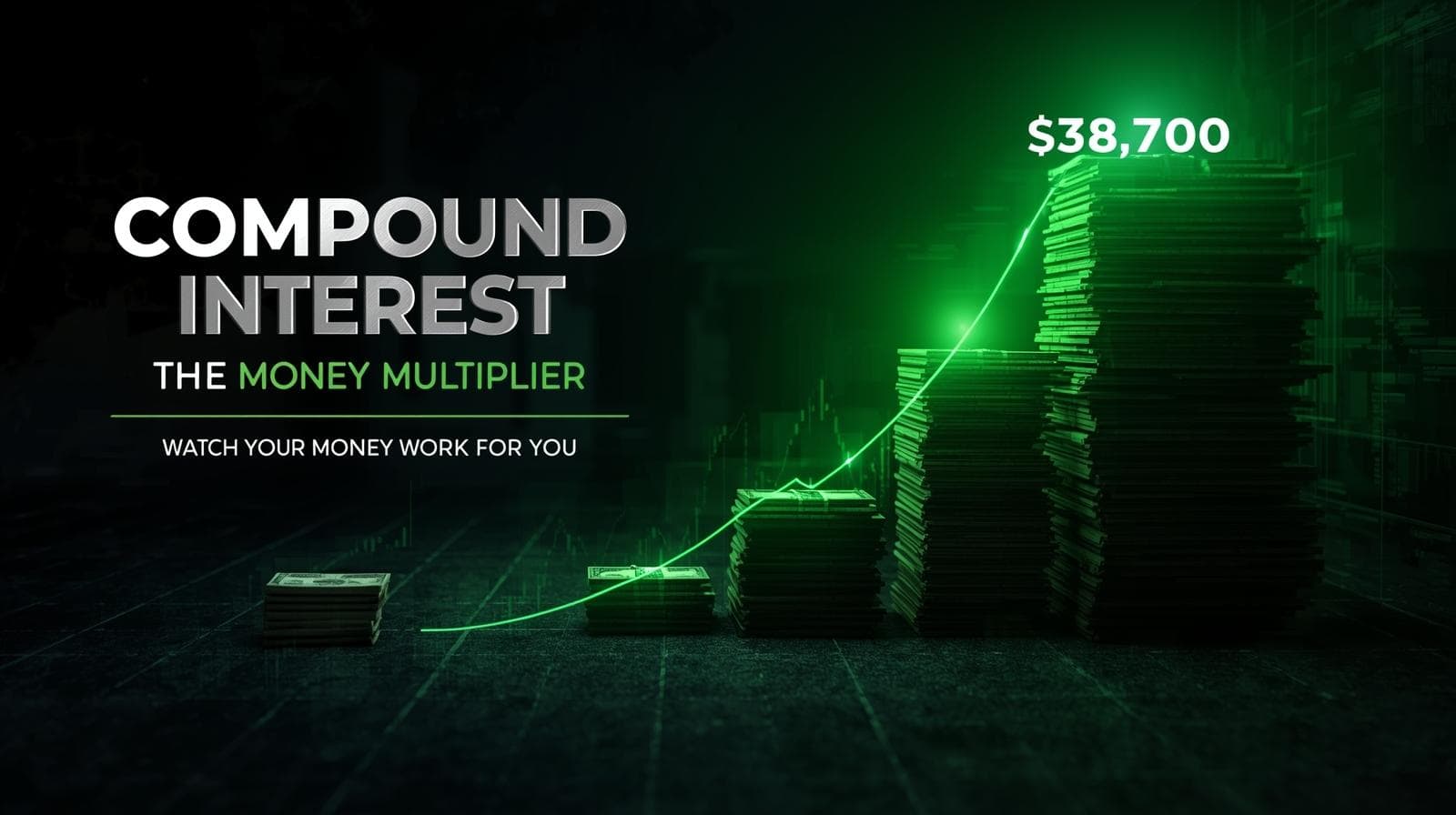
The core formula is simple: A = P(1 + r/n)^(nt), where your interest earns interest on top of itself. That’s the magic. With simple interest, $10,000 at 7% for 20 years gives you $24,000. With compound interest, the same numbers produce nearly $38,700 — the difference is your money working recursively.
A few things worth noticing as you play with the sliders:
Time is the biggest lever. Drag “years” from 10 to 30 and watch the green bar explode. The growth isn’t linear — it’s exponential, which is why starting early beats starting with more money.
Rate matters more than it looks. The difference between 5% and 10% feels small but produces roughly double the final balance over 20 years. That’s why index fund expense ratios — which shave fractions of a percent — actually matter a lot compounded over decades.
Monthly contributions supercharge it. Even $100/month added to a $10,000 base dramatically outpaces a larger lump sum left alone. That’s the classic “time in market + consistent contributions” combo that dividend investors like you know well.
The green bar (interest earned) is the part that costs you nothing once the principal is deployed — it’s pure momentum built on itself.
This is a basic overview of how compound interest works. If you want more information on this topic let me know and I will create a YouTube video on this subject!