
Here’s a dirty secret the wealth management industry doesn’t want you to know: only 27% of financial advisors are actually satisfied with their firm’s technology. That’s according to a WealthManagement.com survey, which also found that 74% of advisors plan to prioritize tech upgrades in 2026. Yet most retail investors are still using the same three tools their parents used—a checking account, a brokerage app, and blind hope—rather than building a dedicated sovereign investor tech stack.
Enter the sovereign investor. This isn’t about gold coins buried in your backyard or renouncing your citizenship. It’s about owning your data, diversifying your platform risk, and refusing to be trapped in any single ecosystem. A modular sovereign investor tech stack ensures your best-in-class tools work together without creating a single point of failure.
Why is 2026 the definitive year to finalize your sovereign investor tech stack? Three reasons. First, AI integration has reached the point where it can actually help (not just generate useless chatbots). Second, platform consolidation means your favorite fintech app is probably getting acquired by a bank that will ruin it. Third, data privacy concerns have moved from paranoid fantasy to legitimate business risk.
This guide covers seven tools that form a complete sovereign investor tech stack. Each one serves a specific purpose, and together they create a system that’s greater than the sum of its parts.
What is this app stack, and why does it matter?
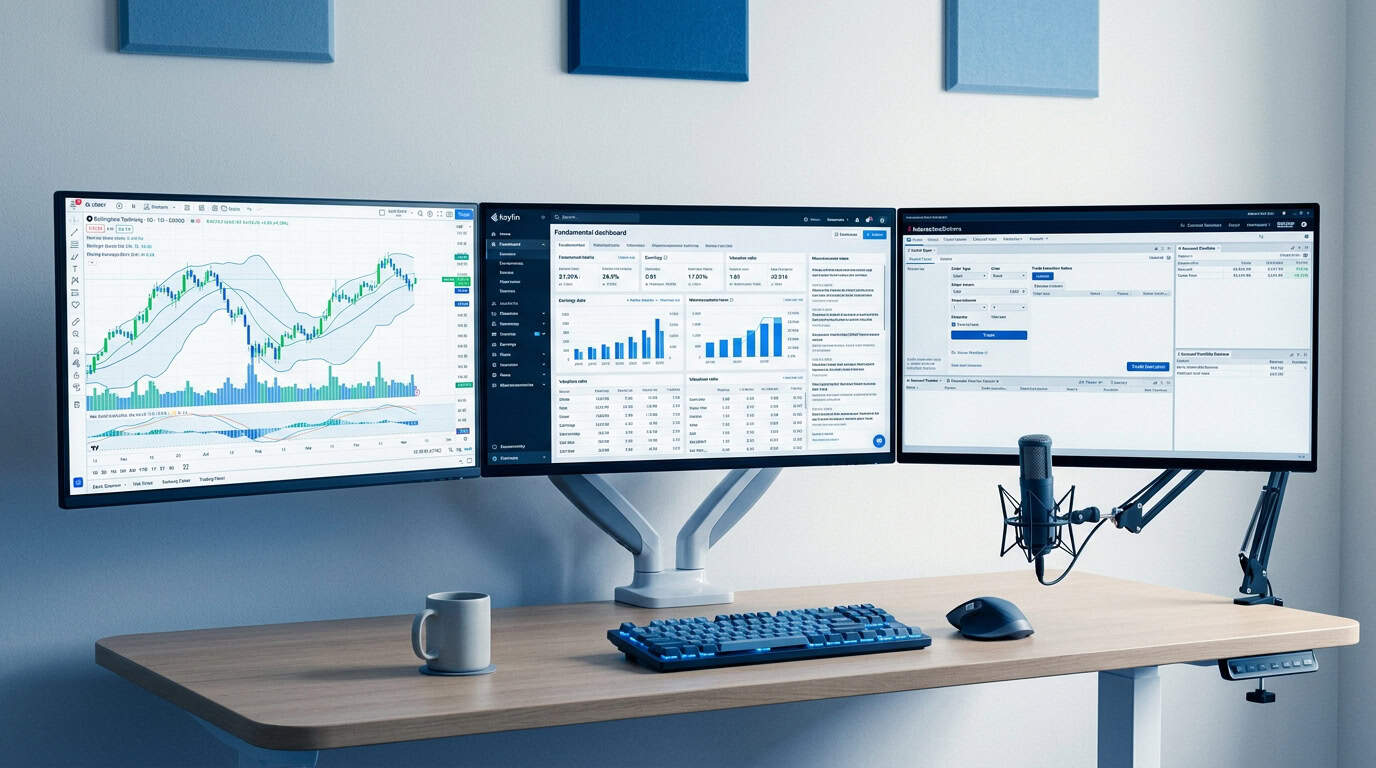
A sovereign investor tech stack is a modular architecture of best-in-class tools for managing your wealth. Think of it like building a custom PC instead of buying a pre-built: you choose each component for its specific strengths rather than accepting whatever Dell decided to bundle together.
The key principles are simple:
- Self-custody: Your data belongs to you, not the platform
- Interoperability: Tools can exchange data via exports, APIs, or standard formats
- No single point of failure: If one tool fails, the whole system doesn’t collapse
This contrasts with all-in-one platforms like robo-advisors or full-service brokerages. Those offer convenience, sure. But they also create lock-in. When your checking, investing, budgeting, and analysis all live in one app, that app owns you. Platform outages, data breaches, or fee increases become existential threats rather than minor inconveniences.
The sovereign approach accepts a bit more complexity in exchange for control. You trade one login for seven, but you gain the ability to swap out any component without disrupting your entire financial life.
The 7 essential tools at a glance
Before diving into each tool, here’s a quick comparison of the complete sovereign investor tech stack:
| Tool | Purpose | Price Range | Best For |
|---|---|---|---|
| TradingView | Charting & technical analysis | Free to $199.95/mo | Anyone who wants to understand price action |
| Interactive Brokers | Trade execution & custody | $0 to $0.005/share | Low-cost trading, global markets |
| Koyfin | Fundamental research | Free to $79/mo | DIY investors who want Bloomberg power |
| YNAB | Budgeting & cash flow | $109/year | People who need to control spending |
| 1Password | Security & passwords | $47.88/year | Anyone with more than 10 passwords |
| Ledger | Crypto self-custody | $79 to $399 | Crypto investors who want real security |
| Passiv | Portfolio rebalancing | Free to $99/year | Passive investors who hate manual rebalancing |
Total annual cost: Approximately $978 to $1,028 for the full stack. Compare that to a traditional advisor charging 1% on a $100,000 portfolio ($1,000/year) and the math starts looking interesting.
1. TradingView
Most retail investors are flying blind. They check their brokerage app, see a green or red number, and make decisions based on vibes. TradingView fixes this by giving you professional-grade charting and technical analysis used by 100 million traders worldwide.
The TradingView platform offers 400+ pre-built technical indicators, 100,000+ community-powered indicators via Pine Script (their custom scripting language), and charting tools that would make a Bloomberg terminal blush. You get bar replay for historical back testing, 110+ smart drawing tools, and multi-condition alerts that can trigger via webhooks.
Pricing ranges from free (with ads and limited features) to Ultimate at $199.95/month. For most investors, the Essential plan at $12.95/month (billed annually) hits the sweet spot: 2 charts per tab, 5 indicators per chart, 20 price alerts, and no ads.
The sovereignty angle here is data portability. Your chart layouts, watchlists, and scripts live in your TradingView account and can be exported. You’re not building analysis that gets trapped on someone else’s servers. For a deeper dive, check out our full TradingView Review 2026: 7 Brutal Truths Traders Ignore.
2. Interactive Brokers
Your brokerage is the foundation of your entire financial system. Choose wrong, and you’re paying hidden fees, getting front-run by market makers, or locked out of entire asset classes.
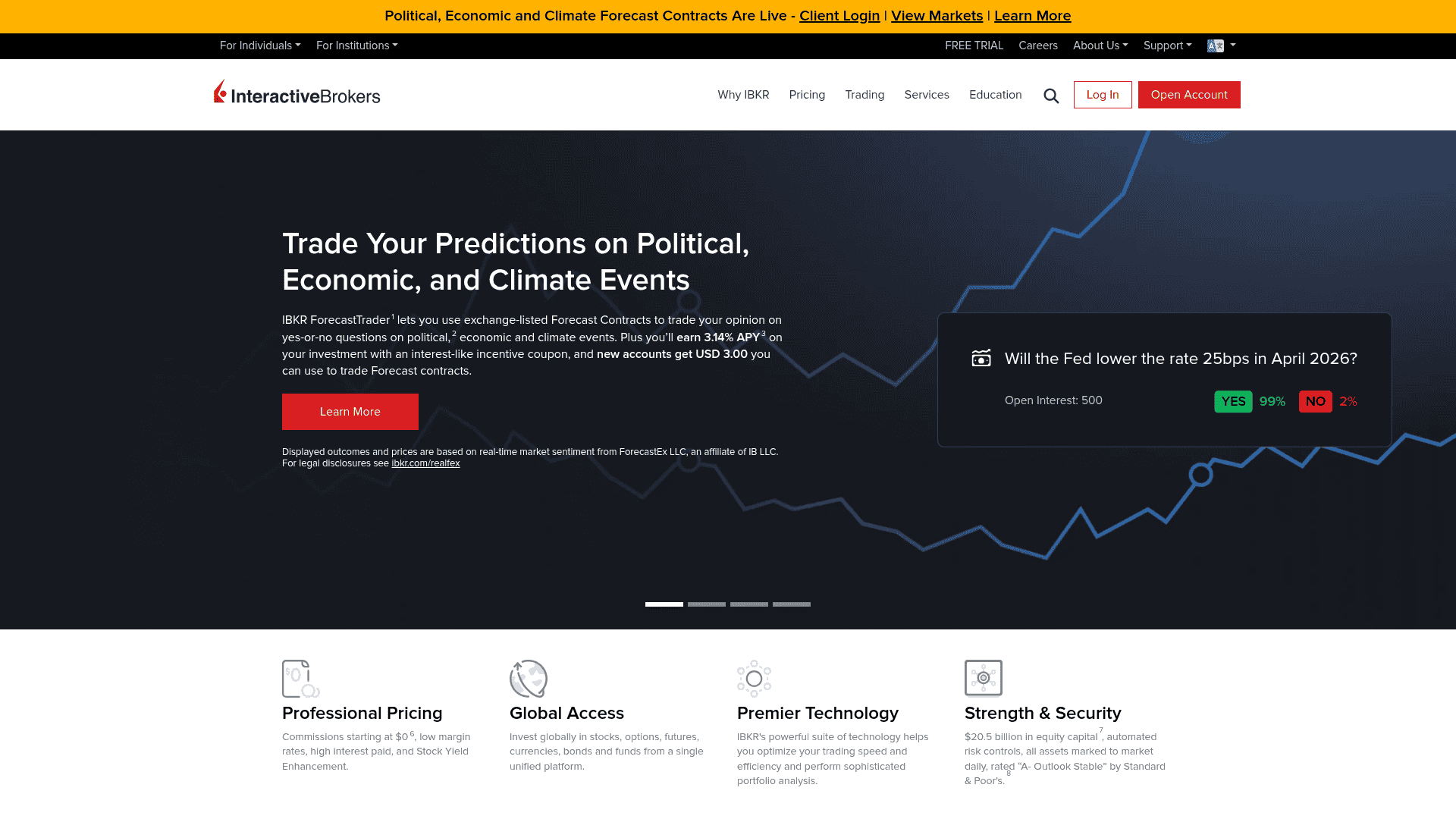
Interactive Brokers offers access to 150+ markets across 33 countries, margin rates between 4.14% and 6.14% (significantly below competitors’ double-digit rates), and two pricing tiers. IBKR Lite gives you $0 commissions on US stocks and ETFs. IBKR Pro offers tiered pricing starting at $0.0035 per share with a $0.35 minimum.
The sovereignty play here is transparency. IBKR Pro doesn’t sell your order flow to market makers (unlike many “free” brokers). You get direct market access and pricing that actually reflects what you’re paying. For options, you’re looking at $0.25 to $0.65 per contract depending on the premium.
If you want a more automated approach to portfolio construction, you might also consider our M1 Finance Review (2026) for pie-based investing.
3. Koyfin
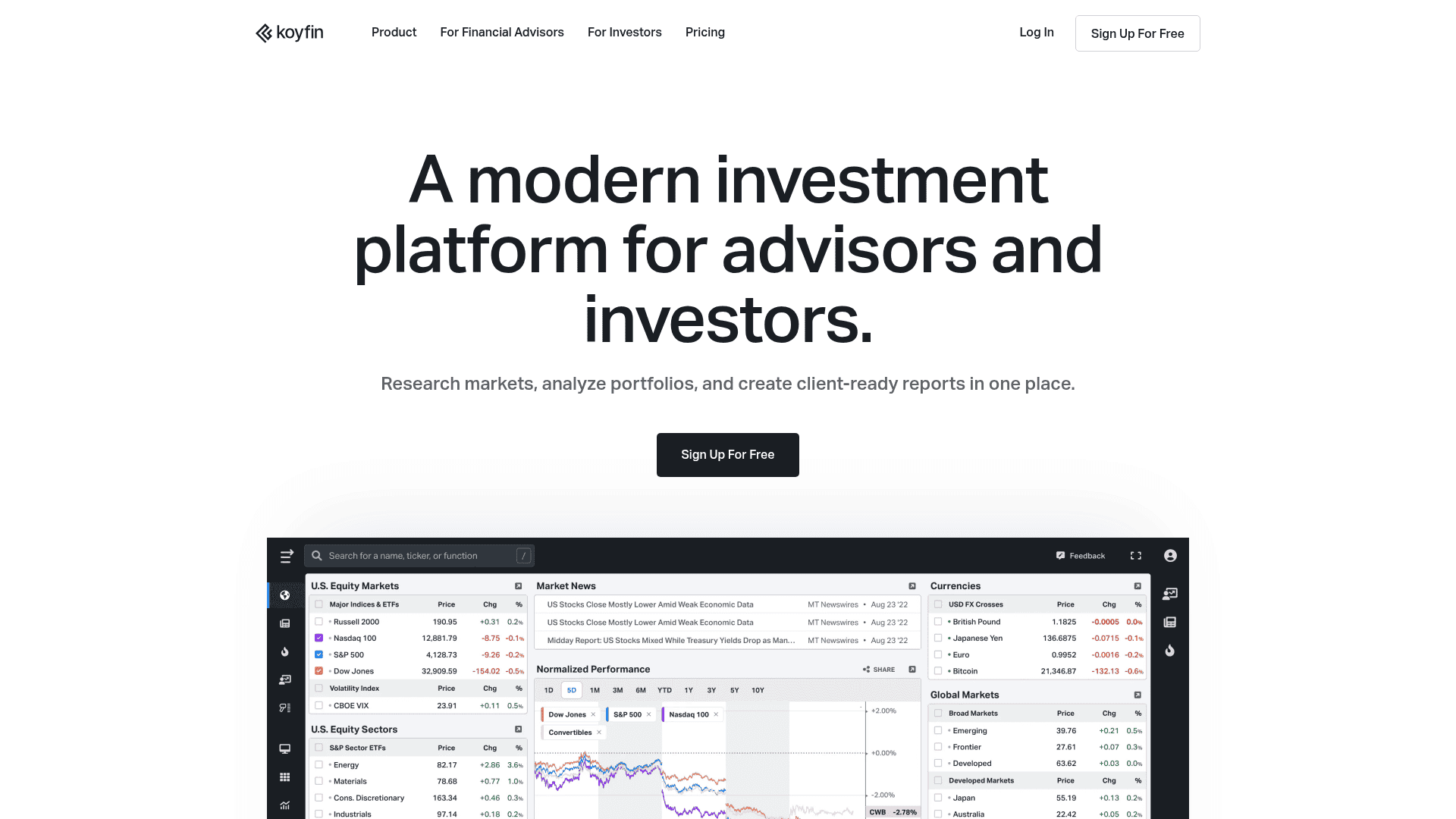
Fundamental analysis used to require a Bloomberg Terminal ($24,000/year) or a job on Wall Street. Koyfin gives you about 80% of that functionality for $948/year with their Premium plan.
The platform offers 100,000+ global company snapshots, advanced stock and ETF screeners, custom dashboards with unlimited formulas, and deep ETF analysis including full holdings and exposure breakdowns. You get 10 years of financials and estimates, earnings transcripts, and SEC filings all in one place.
The Plus plan at $468/year (effectively $39/month) covers most individual investors’ needs. The free tier gives you 2 years of financials and basic charting if you want to test the waters.
Important note for 2026: Koyfin discontinued their Pro plan as of April 30, 2026. Existing Pro users were migrated to Premium at the same price, but new users should choose between Plus and Premium based on whether you need unlimited custom formulas and advanced portfolio analytics.
4. YNAB (You Need A Budget)
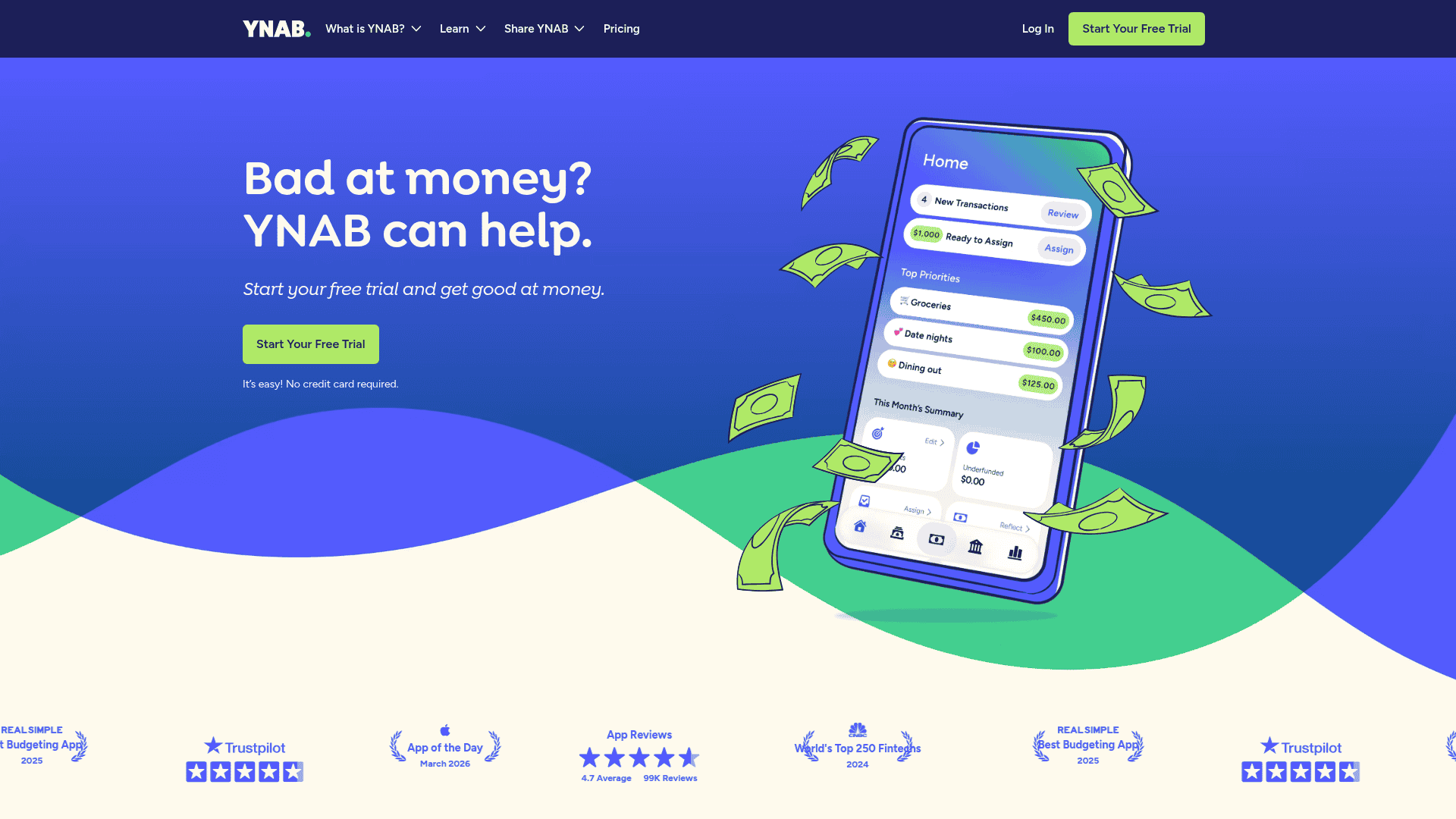
You can’t invest what you don’t save. YNAB attacks the problem at its source with a zero-based budgeting methodology that forces you to “give every dollar a job” before the month begins.
The app connects to 12,000+ banks via Plaid, tracks your spending in real-time across devices, and offers goal tracking with progress visualization. The average new user saves $600 in their first month and over $6,000 in their first year according to YNAB’s internal data.
Pricing is $109/year (effectively $9.08/month) or $14.99 if you pay monthly. The subscription includes up to 6 family members, and college students get a free year with a valid .edu email address.
The sovereignty angle here is privacy. YNAB’s explicit policy: “You pay us, that’s it. We don’t sell your data.” In an era where most “free” finance apps monetize your spending patterns, this matters more than you might think.
5. 1Password
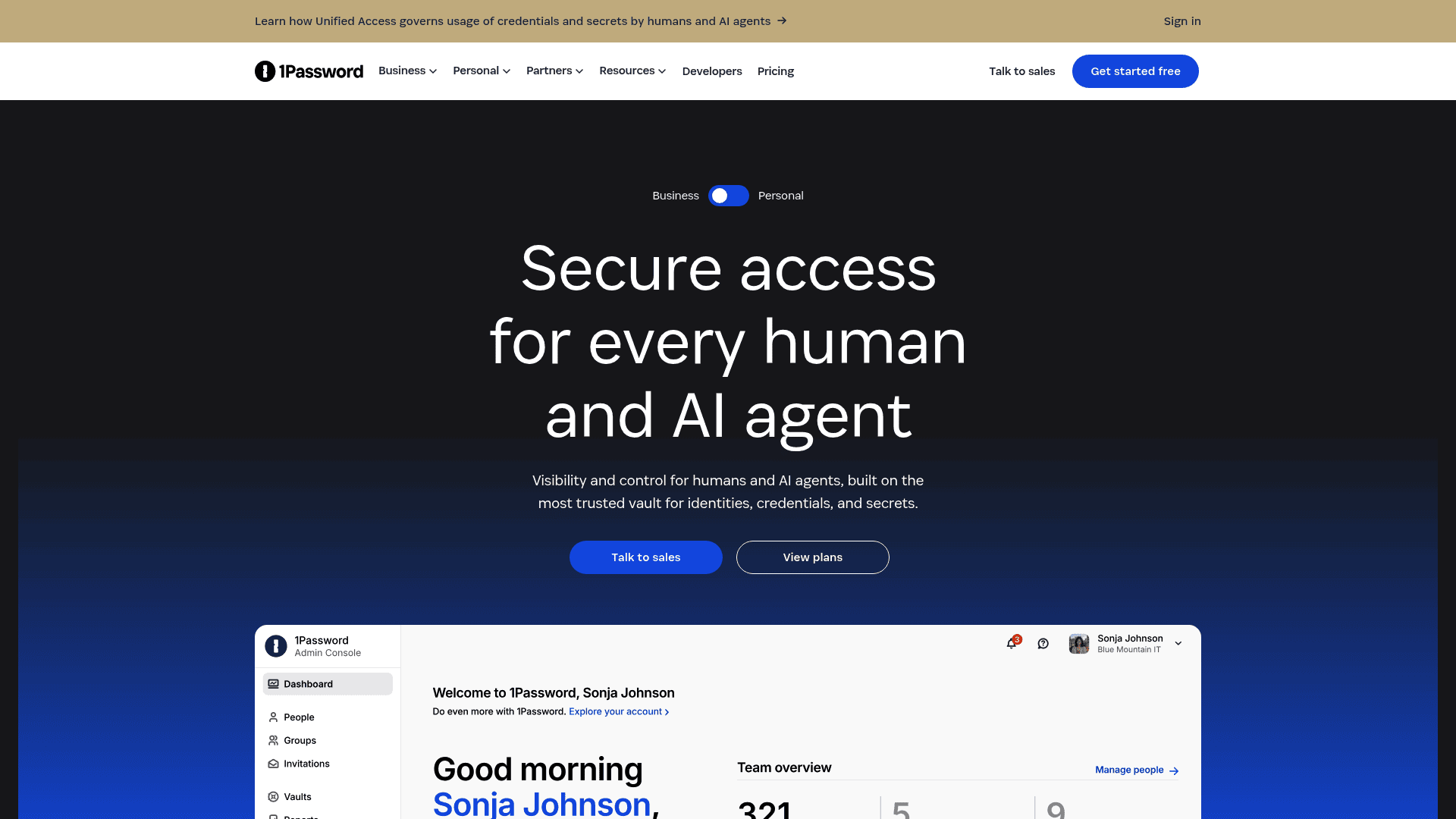
One compromised account can wipe out years of investment gains. If someone gets into your email, they can reset your brokerage password. If they get your brokerage password, they can liquidate your positions. Security is not paranoia; it is risk management.
1Password stores unlimited passwords with end-to-end AES 256-bit encryption, generates strong passwords automatically, monitors for data breaches via their Watchtower feature, and stores 2FA codes so you don’t need a separate authenticator app. You also get 1GB of secure document storage for things like tax records or estate documents.
Pricing increased in March 2026: Individual plans are now $47.88/year (up from $35.88), and Families plans are $71.88/year (up from $59.88). The architecture uses a Secret Key plus Master Password, meaning even 1Password can’t access your data.
6. Ledger
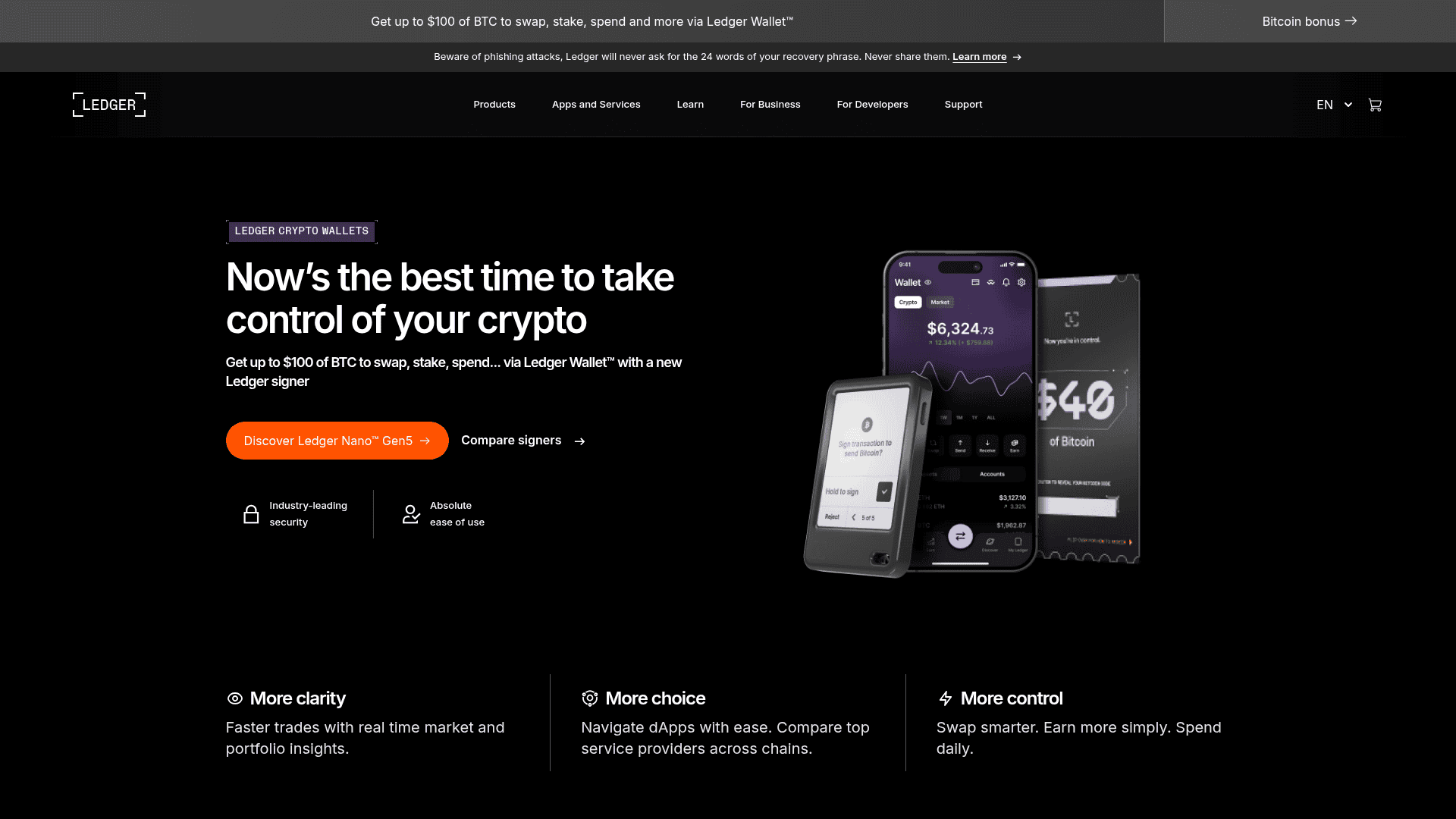
Not your keys, not your crypto. Exchange failures happen with alarming regularity, and when they do, your “assets” become unsecured creditor claims in a bankruptcy proceeding.
Ledger makes hardware wallets that keep your private keys offline in an EAL6+ certified secure element chip. The devices support 5,500+ cryptocurrencies and integrate with Ledger Live, a companion app for buying, selling, swapping, and staking.
Pricing ranges from the Nano S Plus at $79 (USB-C only, no battery) to the Stax at $279-399 (flagship with 3.7″ curved E Ink display designed by Tony Fadell, the creator of the iPod). Most users should consider the Nano X at $99-149, which adds Bluetooth for mobile connectivity and a built-in battery.
The sovereignty here is absolute. Your private keys never touch an internet-connected device. No KYC required to use the device. No company can freeze your assets or comply with a court order to seize them.
7. Passiv
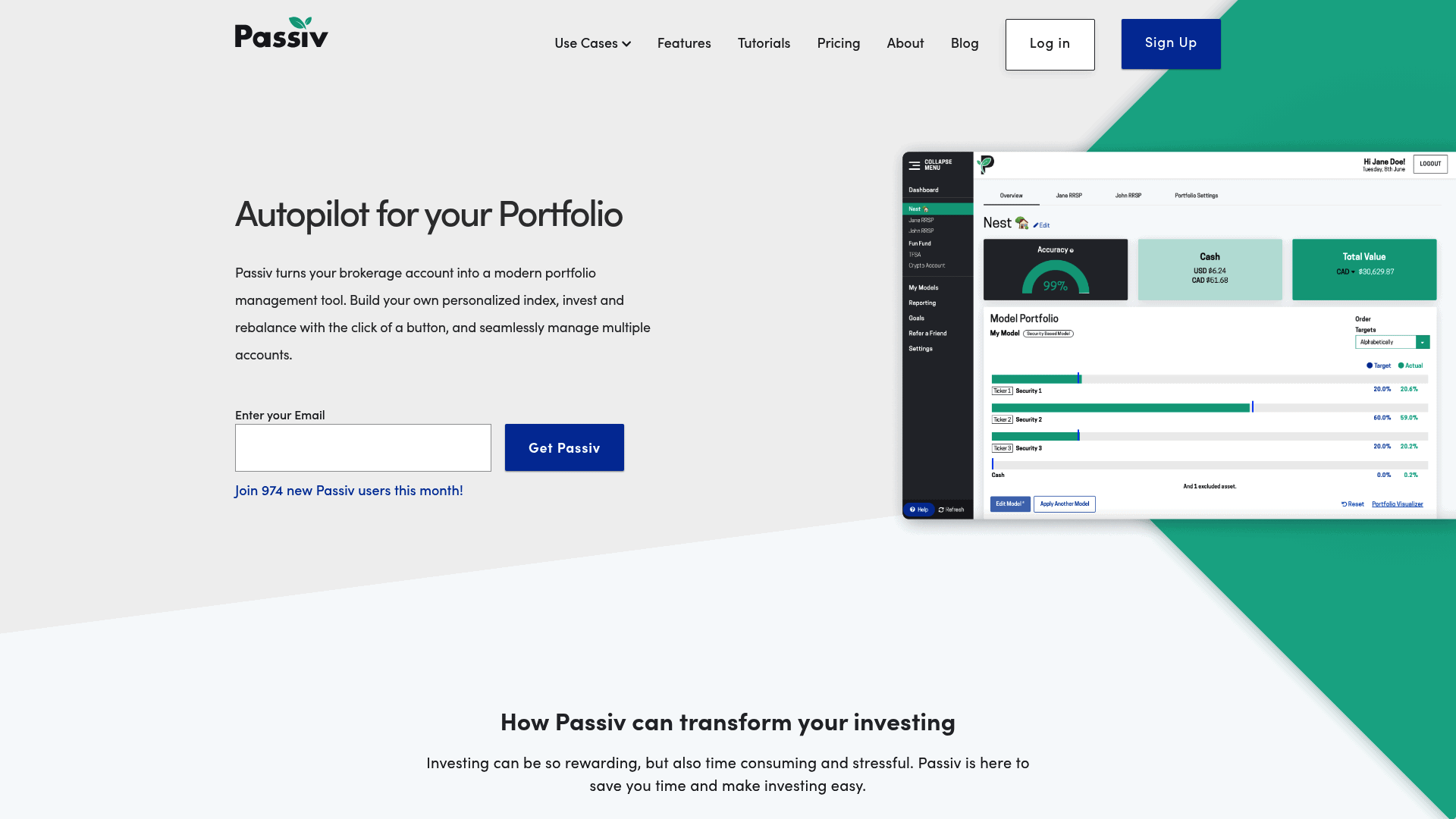
Emotion is the enemy of investing. Passiv removes it by automating the most tedious part of portfolio management: rebalancing.
The platform connects to your brokerage accounts (including Interactive Brokers, Questrade, and others), calculates the exact trades needed to maintain your target allocations, and can execute them with one click. You get cash drag notifications when idle cash builds up and dividend notifications when distributions hit your account.
The Community tier is free and includes automated calculations, multi-account portfolios, and one-click trades. The Elite tier at $99/year adds advanced features for power users.
Crucially, Passiv operates on a read-only basis. It calculates trades but can’t execute them without your explicit approval. You maintain full custody of your assets. For more on why removing emotion from investing matters, see our guide on behavioral finance.
How the stack works together
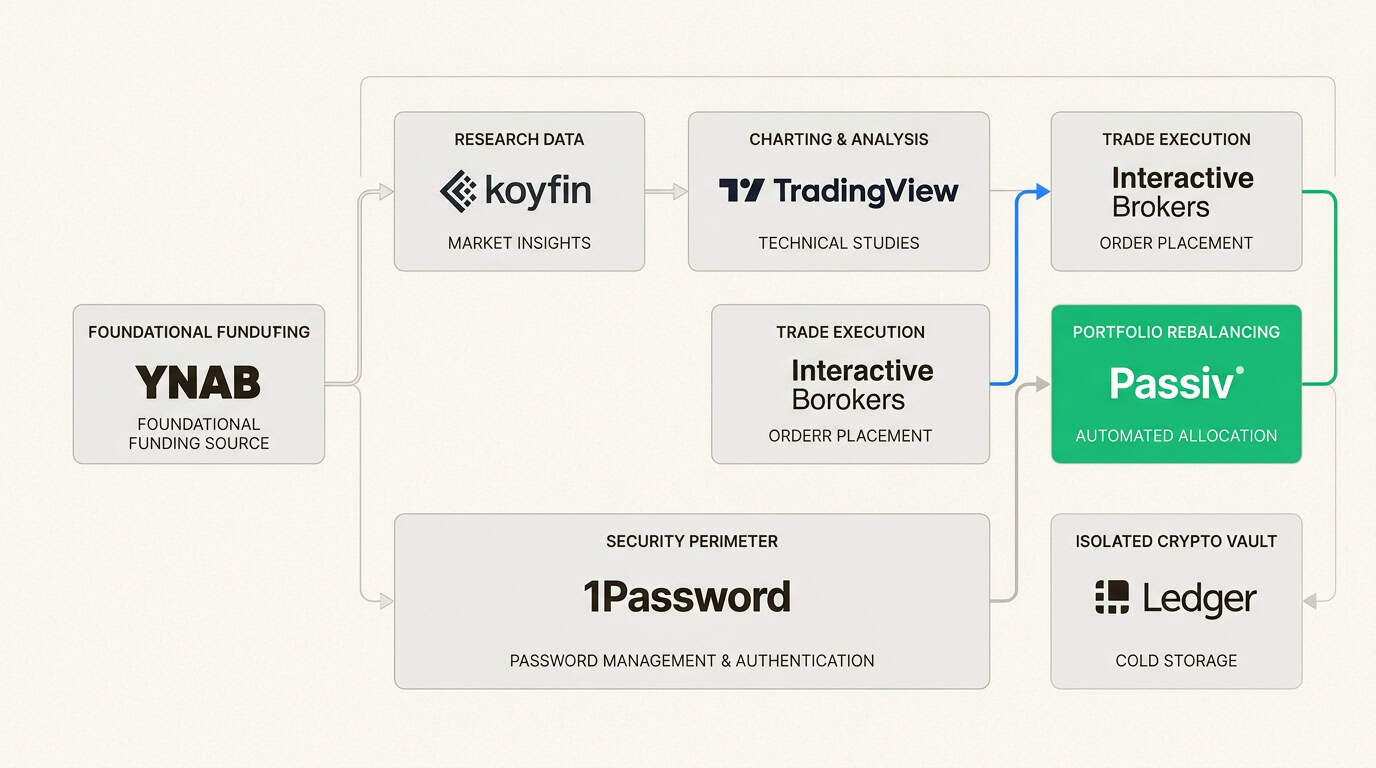
In my 20+ years as a technology professional, I’ve seen countless “all-in-one” platforms promise simplicity only to deliver lock-in and lag. As an outdoorsman who values a reliable backup for every piece of gear, I apply the same “no single point of failure” logic to my finances. Here is the operational workflow for your sovereign investor tech stack:
The Workflow: From Research to Resilience
- Research & Discovery (Koyfin): Start by screening for undervalued assets or deep-diving into ETF holdings. This is where you find the signal in the noise.
- Analysis & Validation (TradingView): Once you have a lead, verify the entry points with professional-grade charting. Set your alerts and walk away.
- Execution (Interactive Brokers): Place your trades through a broker that prioritizes transparent execution over “gamified” engagement.
- Portfolio Governance (Passiv): This is where the automated financial syncing software reviews come into play. Passiv connects to your brokerage to calculate drift and automate rebalancing without ever taking custody of your funds.
- Cash Flow Defense (YNAB): Ensure you are consistently “funding the machine” by giving every dollar a job before it has a chance to disappear into mindless spending.
- The Perimeter (1Password): Secure every login and 2FA code. If your security layer is weak, the rest of the stack is just a gift for a hacker.
- Final Custody (Ledger): For any digital assets, move them off the “rented land” of exchanges and into your own physical possession.
The “Witty” Verdict on Integration
The integration points between these tools are mostly via secure APIs or standard CSV exports. While this isn’t as “seamless” as a bank-owned app that does everything poorly, that slight friction is actually your protection. In your sovereign investor tech stack, you are the master architect, not a tenant. If Interactive Brokers starts acting like a high-street bank, you swap them out for Schwab or Fidelity without having to rebuild your research, budgeting, or security layers from scratch.
Maintaining a sovereign investor tech stack requires a bit more intentionality, but in a 2026 market defined by volatility and platform instability, the “convenience” of an all-in-one app is a luxury you simply can’t afford.
Building your stack: where to start
Don’t try to implement all seven tools at once. Here’s a phased approach:
Phase 1: Foundation (Month 1)
- Set up 1Password first. Secure your existing accounts before adding new ones.
- Open your Interactive Brokers account. The approval process can take a few days.
Phase 2: Analysis (Months 2-3)
- Add TradingView for charting. Start with the free tier to learn the interface.
- Subscribe to Koyfin Plus if you’re doing fundamental research.
Phase 3: Automation (Months 4-5)
- Implement YNAB if budgeting is your weakness.
- Connect Passiv to your brokerage accounts for rebalancing.
Phase 4: Advanced (Month 6+)
- Add a Ledger device if you hold significant crypto assets.
- Upgrade any tools where you’ve hit the limits of free tiers.
For more guidance on building your investment knowledge alongside your tech stack, explore our Dividend Court and Reviews archive.
The mindset behind it
This approach matters more in 2026 than ever before. Three trends make the sovereign investor mindset essential:
Platform consolidation: Your favorite fintech app is probably getting acquired. When that happens, fees increase, features get removed, and data policies change. A modular stack lets you swap out components without starting over.
AI data harvesting: Large language models need training data. Free tools increasingly monetize by feeding your behavior into AI systems. When you pay for tools like YNAB or 1Password, you’re the customer, not the product.
Regulatory uncertainty: From crypto regulation to wealth taxes, the rules are changing fast. A system that doesn’t depend on any single jurisdiction or company is more resilient to policy shifts.
The cost of convenience is real. All-in-one platforms offer one login and seamless integration, but they also create lock-in. When you’re ready to think about portfolio resilience in a broader sense, our guide on The Bunker Portfolio: How to Invest When the World Feels Fragile explores similar themes.
Start building your app stack today
Let’s recap: seven tools, approximately $1,000 per year for the full stack, compared to $5,000+ for a traditional advisor managing a $500,000 portfolio. You trade some convenience for control, but you gain a system that outlasts any single company and adapts to whatever 2026 throws at you.
The best place to start? TradingView. Even the free tier will show you what professional-grade analysis looks like, and you’ll quickly understand why most retail investors are flying blind.
Your wealth deserves better than free tools with hidden costs and platforms that treat you like a data source. Build your stack. Own your data. Stay sovereign.