Why smart people still lose money in the stock market (and how to stop)

Why smart people still lose money in the stock market (and how to stop)
Here’s a humbling thought: Albert Einstein, the man who revolutionized physics and gave us $E=mc^2$, lost most of his Nobel Prize money in the 1929 stock market crash. If a genius like Einstein couldn’t outsmart the market, what chance do the rest of us have? Why smart people still lose money often comes down to the simple fact that the stock market doesn’t care about your IQ score.
The uncomfortable truth is that intelligence and investing success have surprisingly little to do with each other. In fact, being smart can actually work against you. When we look at why smart people still lose money, we see that according to Robert Kiyosaki’s team at Rich Dad, 67% of Americans live paycheck to paycheck, including many with advanced degrees. Medical doctors, despite their substantial incomes, have one of the highest bankruptcy rates among professionals.
So, why smart people still lose money in the stock market isn’t about lacking information or analytical ability. It’s about psychology, behavior, and a set of invisible traps that high-IQ individuals are particularly susceptible to falling into. Let’s break down what’s really happening and, more importantly, how to stop the cycle.
Let’s break down what’s really happening and, more importantly, how to stop the cycle.
The intelligence paradox in investing
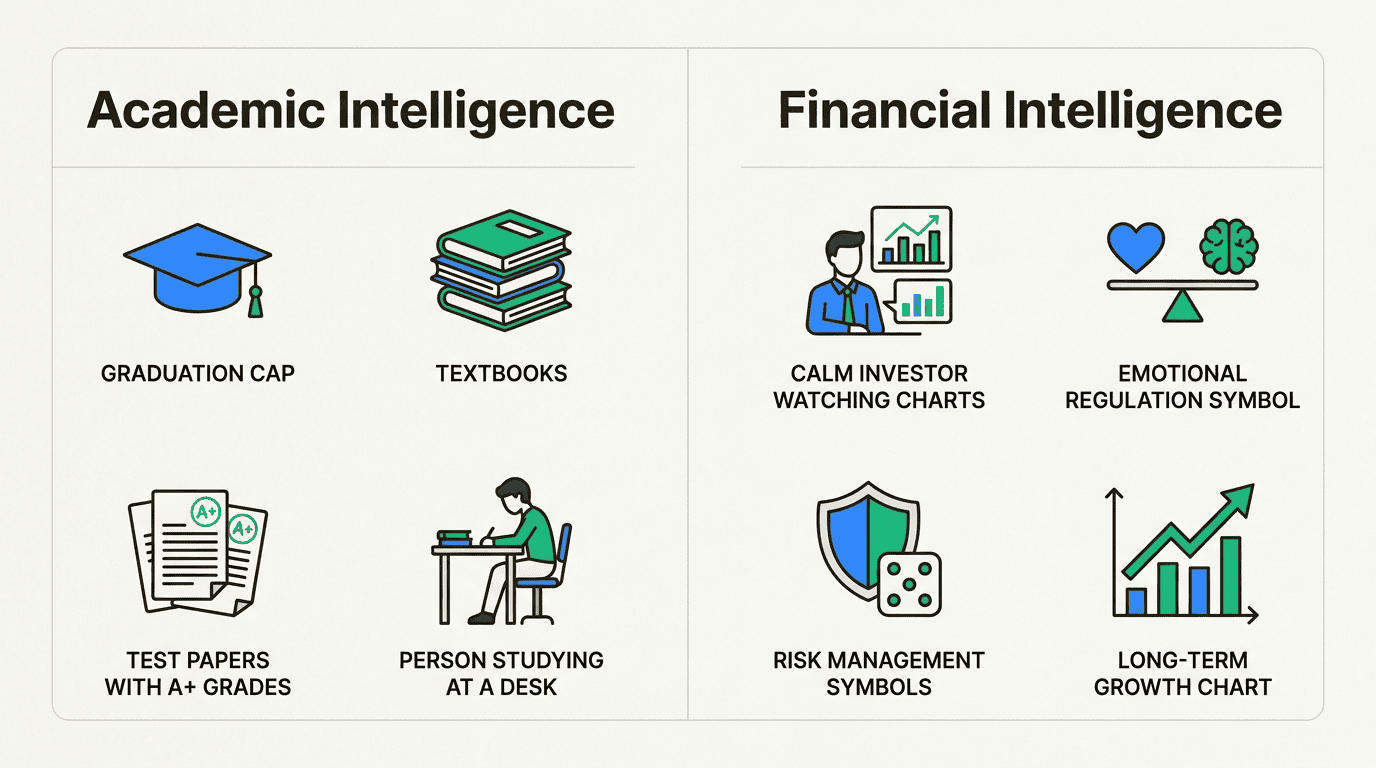
There is a critical distinction between academic intelligence and financial intelligence. Academic intelligence involves memorizing and analyzing information within established systems. Financial intelligence means understanding money’s psychological dynamics and taking calculated risks despite uncertainty. Why smart people still lose money often comes down to trying to apply rigid classroom logic to a chaotic, emotional market.
The educational system trains us to seek security, follow rules, and avoid mistakes. Students learn to find the “right” answer and fear failure. This creates excellent employees but often struggles to create wealth builders. When you spend 16+ years being rewarded for finding correct answers, it’s hard to accept that markets don’t have answer keys—and that gap in the curriculum is exactly why smart people still lose money in the real world.
Smart people fall into the overconfidence trap because they believe they can out-analyze the market. A software engineer might spend months researching real estate markets, analyzing cap rates, and building elaborate spreadsheets. By the time they feel “ready” to invest, property prices have increased and the opportunity has passed. Less educated investors who understood the basic principle of buying income-generating assets made profitable purchases months earlier.
This is analysis paralysis in action. The need for certainty paralyzes intelligent people because financial markets are inherently uncertain. Intelligence breeds overconfidence in complex strategies, leading people to believe they need sophisticated approaches to make major money. In reality, simple discipline usually beats clever analysis, and ignoring that simplicity is ultimately why smart people still lose money.
The brutal math most investors ignore
Hendrik Bessembinder, the Francis J. and Mary B. Labriola Endowed Chair at Arizona State University’s W.P. Carey School of Business, conducted groundbreaking research that changed how we understand stock market returns. His findings are sobering.
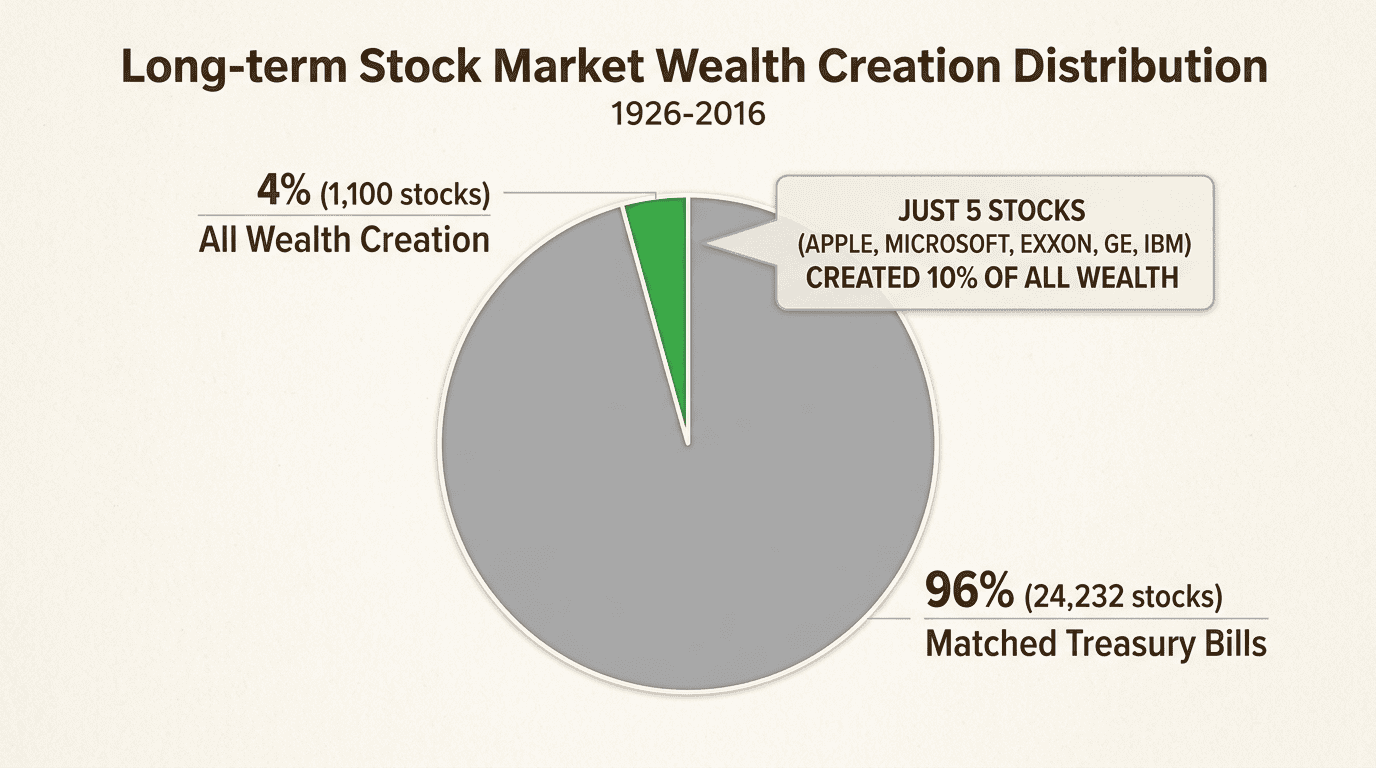
Between 1926 and 2016, just 4% of publicly listed stocks (approximately 1,100 out of 25,332 firms) accounted for all net wealth creation in the U.S. stock market. The remaining 96% of stocks collectively matched the returns of one-month Treasury bills. Without that top 4%, the stock market as a whole would not have outperformed U.S. Treasury bonds.
The concentration is even more extreme than that:
- Just 86 stocks (0.33% of all stocks) accounted for $16 trillion in wealth creation half of the total stock market wealth over 90 years
- Just 5 stocks (Exxon Mobil, Apple, Microsoft, General Electric, and IBM) accounted for 10% of total wealth creation from 1926-2016
- 57.8% of US stocks delivered returns below T-bills
- The median stock lifetime is only 7.5 years
- The most common outcome for stocks is a 100% loss
Even the biggest winners experienced massive drawdowns. Apple fell 74%, 80%, 79%, and 60% at various points in its history. Amazon dropped over 90% during the dot-com crash. If you had sold during any of those crashes (which smart people often do, thinking they’re being rational), you missed the subsequent recoveries.
The index average is misleading due to survivorship bias. The S&P 500 regularly removes failing companies and adds successful ones. When you look at the index performance, you’re seeing the winners. You don’t see the thousands of companies that went to zero.
Five psychological traps that drain wealth
Smart people face specific psychological traps that can derail even the most carefully constructed investment plans.
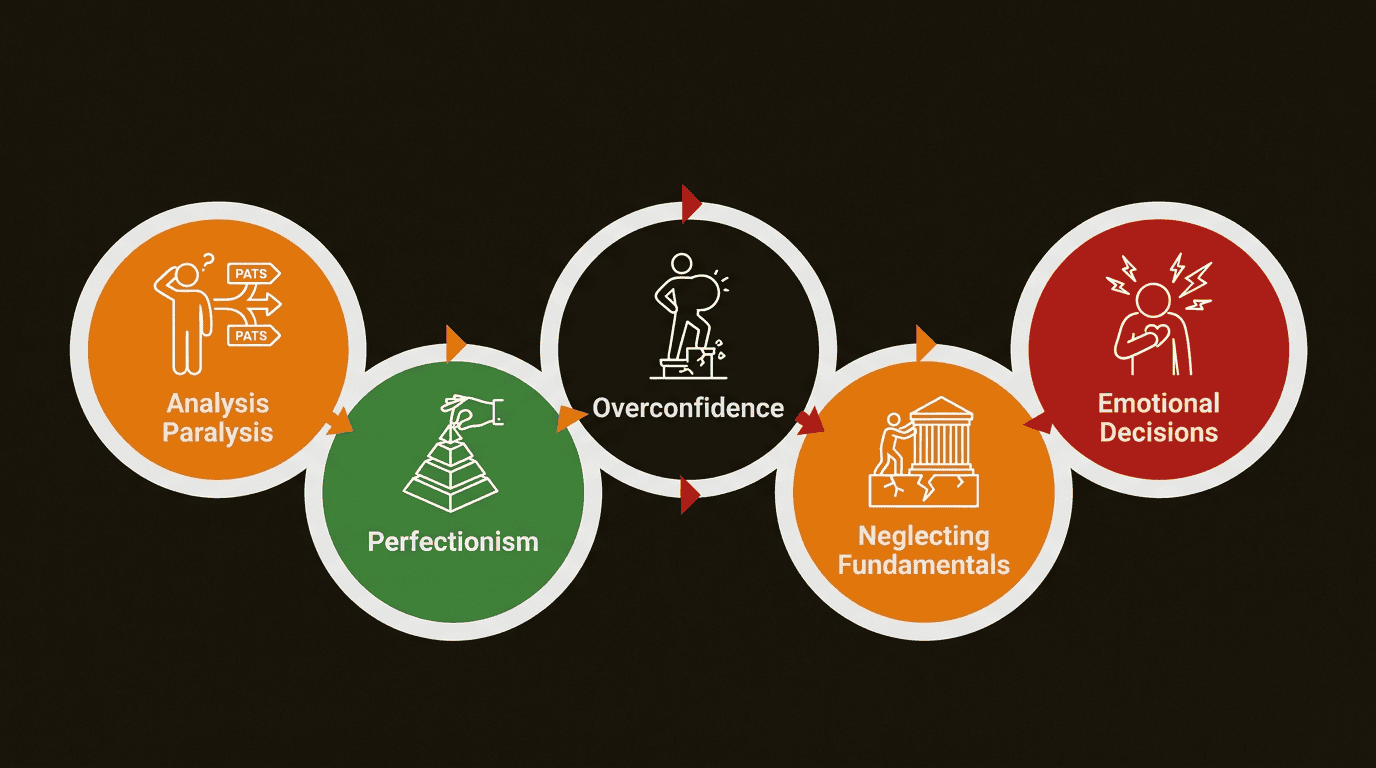
Analysis paralysis
Highly educated people often research investment opportunities to death. They create elaborate spreadsheets and study every possible variable before making decisions, but this “death by spreadsheet” is exactly why smart people still lose money. This need for certainty paralyzes them because financial markets are inherently uncertain.
The problem with information overload is that more data doesn’t lead to better decisions; it just leads to more confusion. At some point, you have to act with incomplete information. Markets don’t wait for you to feel comfortable, and ignoring that cold reality is why smart people still lose money while waiting for the “perfect” data set to appear.
Perfectionism: The Wealth Killer
Students get penalized for mistakes, creating perfectionists who struggle with trial-and-error learning. However, when you’re building wealth, making mistakes means you’re learning.
Successful investors often maintain “failure resumes” documenting their mistakes and lessons learned. Each financial mistake provides valuable feedback about markets, timing, and personal psychology. If you’re too busy waiting for the “perfect” investment idea, you might wait forever without getting started—and that lack of action is ultimately why smart people still lose money.
Overconfidence in Complex Strategies
Intelligence can breed overconfidence, leading people to believe they need sophisticated strategies to make major money. In day trading, smart people sometimes think they can beat the market just by being clever and doing a lot of analysis. This arrogance is often why smart people still lose money; they assume the market is a puzzle that can be “solved” with enough brainpower.
But as Sofien Kaabar, a CFA charterholder, explains: “If you think you’re smart, there are a million others smarter than you and who have already tested your ideas.” Technical indicators are lagging, not predictive. Divergence is merely a warning of exhaustion, not a buy-now or sell-now signal. Understanding why smart people still lose money means recognizing that a complex spreadsheet is no match for a chaotic market.
Neglecting Basic Fundamentals
People with fancy degrees are often smart, but they don’t always understand everyday money stuff. They can do hard math but might not get things like budgeting, debt management, or how to pay less in taxes. They focus on making more money instead of using it wisely. A core reason why smart people still lose money is the dangerous assumption that a high salary is the same thing as wealth.
This happens because they think making a lot of money means they’re building wealth. But as they earn more, they also spend more. Lifestyle inflation among high earners is real. If you’re spending everything you make on German SUVs and private schools, you’re not building wealth no matter how high your income is. Here we see why smart people still lose money: they are “high-income broke.” Building an emergency fund and managing expenses matters more than finding the “perfect” stock pick.
Overcoming Analysis Paralysis in Investing
Emotional Decision-Making
Perhaps most surprisingly, intelligent people often make emotional financial decisions despite their analytical capabilities. They panic during market downturns, chase investment trends, and make impulsive purchases. This is why smart people still lose money despite having an IQ in the top 1%.
This happens because money triggers deep psychological responses like fear, greed, and pride. Intelligence doesn’t eliminate these emotions. The brain’s risk assessment mechanisms evolved for physical survival, not financial markets. When faced with potential financial loss, the amygdala triggers fight-or-flight responses designed for immediate physical threats. This biological system explains why smart people still lose money during market panics—their brains literally treat a portfolio drop like a predator in the bushes.
The Psychology of Money and High IQ Investors
This system interprets market volatility as danger, prompting protective actions that often damage long-term wealth building. Learning to stay calm in a crisis is a skill that applies directly to investing. Ultimately, mastering your pulse is the only real cure for why smart people still lose money.
Why behavior beats brains in the market
Daniel Kahneman, the Nobel Prize-winning psychologist and “grandfather of behavioral economics,” explained this through his concept of System 1 and System 2 thinking. System 1 is fast, automatic, and emotional. System 2 is slow, deliberate, and analytical.
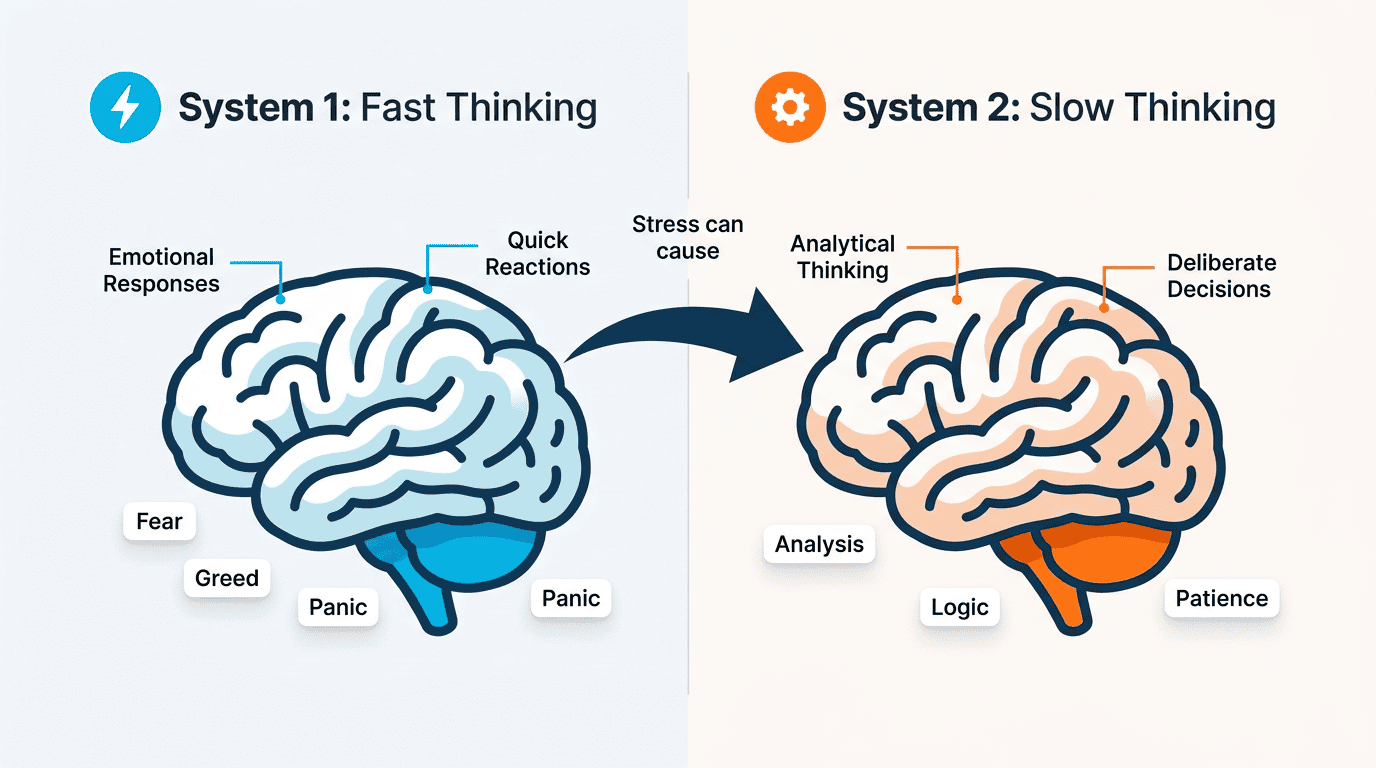
The problem? Under stress, System 1 often overrides System 2. When markets crash, even the smartest people panic because their emotional brain takes over. This internal coup is exactly why smart people still lose money; research shows that investors using System 1 thinking trade 76% more frequently and earn 1.5% less annually than those using System 2 protocols.
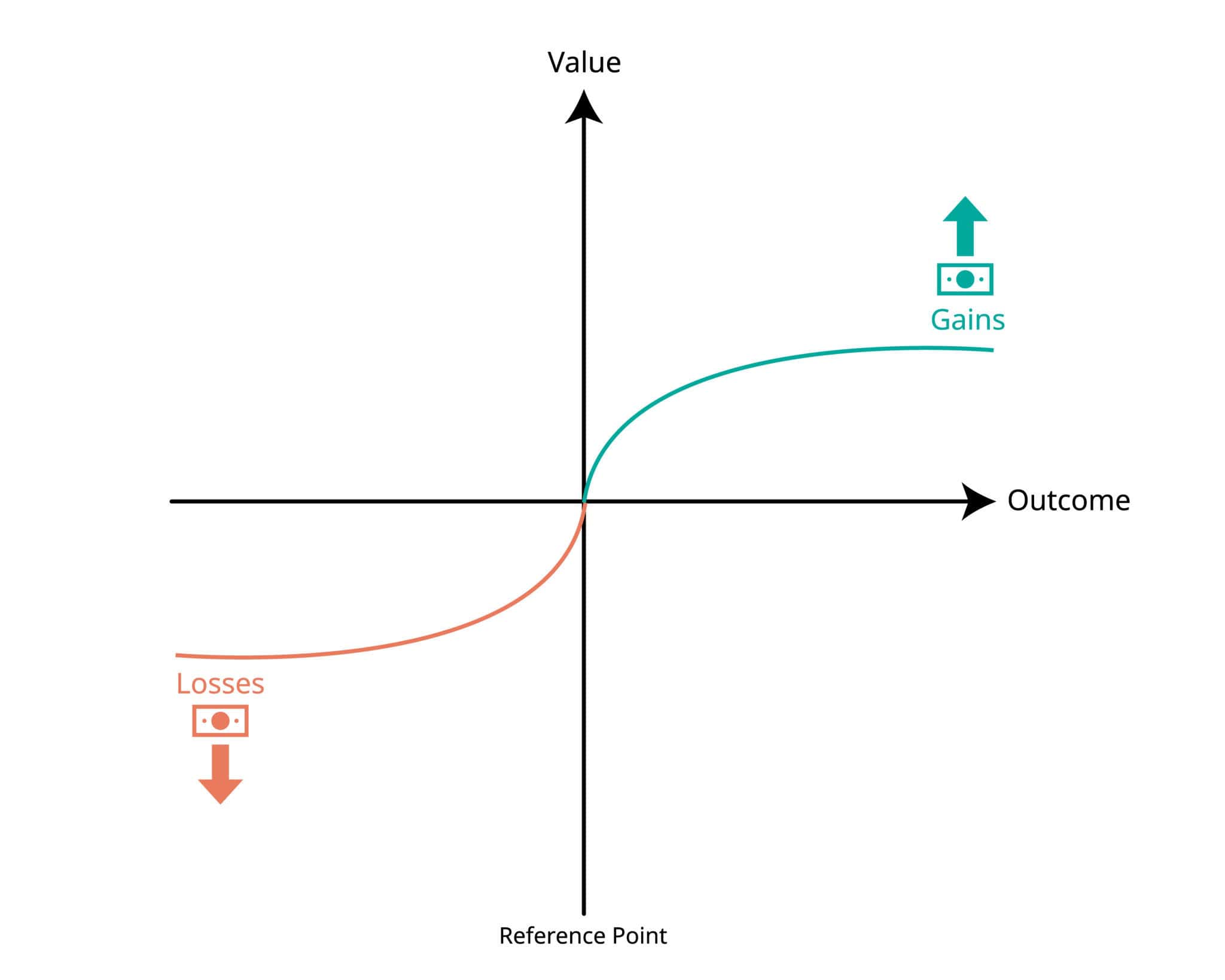
Kahneman’s Prospect Theory reveals that people feel losses approximately 2 times more intensely than equivalent gains. This loss aversion causes investors to hold losing positions too long (hoping to break even) while selling winners too quickly (to lock in gains). It is a classic example of why smart people still lose money: they are more afraid of being “wrong” than they are excited about being “rich.” The pattern repeats endlessly: buy high, sell low, regret later.
The Netflix Qwikster Case Study: A Lesson in Panic
The Netflix Qwikster case study illustrates this perfectly. In 2011, Netflix announced they wanted to split their business into two segments, rebranding movies-by-mail as Qwikster. The media went nuts. The stock fell from $40+ to around $6-7, an 80% decrease. Droves of “intelligent” investors sold at that exact point. Just six years later, Netflix traded at $400 a share. This massive missed opportunity is a textbook case of why smart people still lose money—they follow the noise instead of the numbers.
The perception of information matters. While the media may fuel panic about a company falling from grace, the reality can be diametrically opposite. Netflix had nearly 30 million subscribers and a working business model. Other than a poorly executed idea to split, they hadn’t done anything wrong functionally. It was the same company it had always been, but understanding behavioral finance for smart investors means seeing past the headlines. Understanding the perception of information helps explain why smart people still lose money when the news cycle turns toxic.
Behavioral Finance for Smart Investors: Surviving the Wilderness
How you behave matters more than what you buy. Markets reward patience, but human psychology resists it. As someone who has spent over 20 years prepping for the unexpected in the outdoors, I can tell you that the most dangerous thing in a crisis isn’t the environment—it’s the person who panics. Poor timing is almost always emotional timing, and forgetting that fundamental truth is ultimately why smart people still lose money.
How to rewire your wealth psychology
The good news is that you can change your relationship with money and investing. It starts with recognizing that intelligence is a tool, not a guarantee.
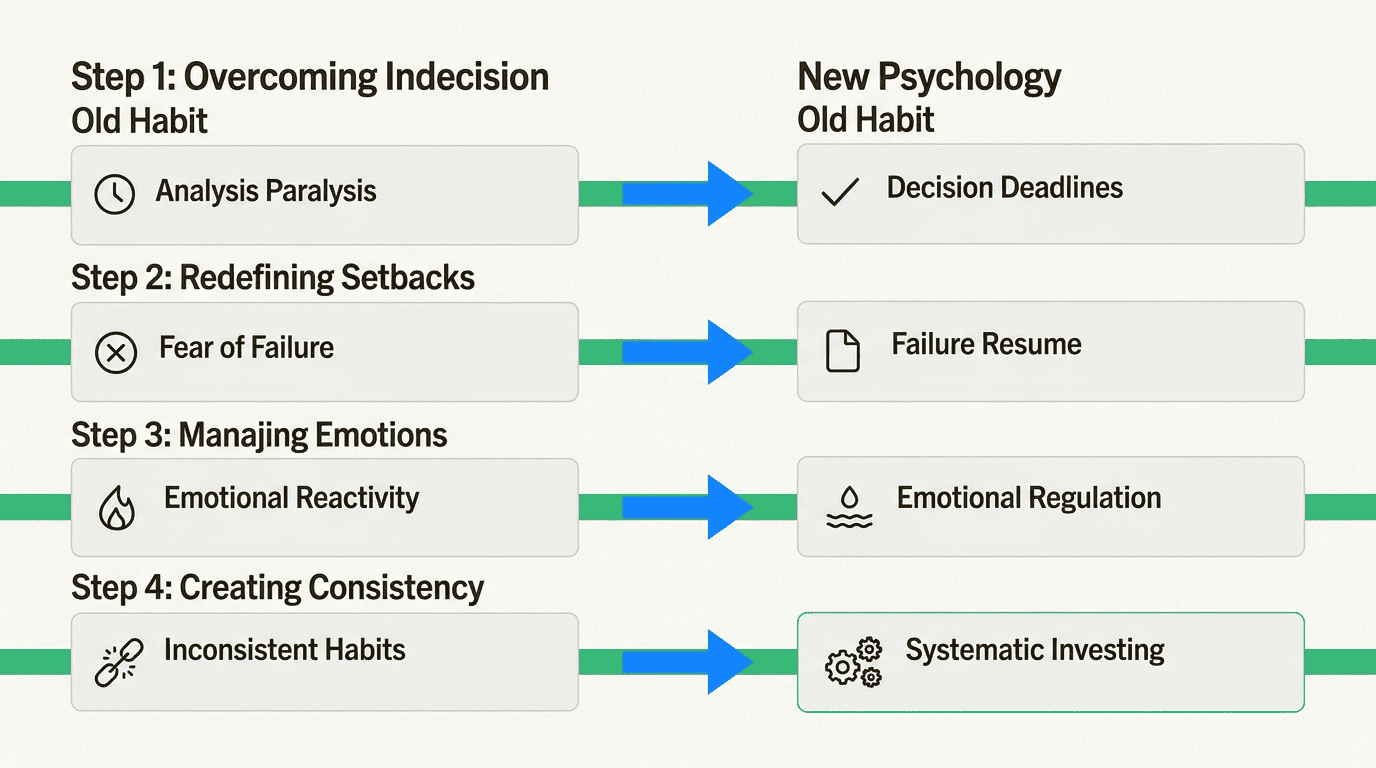
Practice making quick financial decisions
Instead of researching investments for months, set deadlines for decisions and act within that timeframe. This builds comfort with uncertainty and reduces analysis paralysis. Try the 72-hour rule for major decisions: give yourself 72 hours to research, then decide. No extensions.
Developing discipline over motivation is key here. You won’t always feel like making rational decisions, but you need systems that force you to act consistently anyway.
Reframe failure as education
Each financial mistake provides valuable feedback about markets, timing, and personal psychology. Wealthy individuals often maintain failure resumes documenting their mistakes and lessons learned.
The Kelly Criterion, developed by John Kelly at Bell Labs in 1956, offers a mathematical approach to position sizing. The formula (Kelly % = W – [(1-W) / R]) helps determine the optimal fraction of capital to allocate based on your edge and the odds. Most investors use fractional Kelly (half or quarter) to account for uncertainty in their estimates.
The key insight? No edge means no bet. If you don’t have a genuine advantage, don’t invest. This alone would save most smart people from countless losses.
Develop emotional awareness
Notice physical sensations when making financial decisions. Anxiety, excitement, or fear signal emotional involvement that may compromise judgment. Learning to recognize these feelings means you can focus on more objective decision making.
The wealthy develop what psychologists call “emotional regulation” around money. They recognize their emotional responses without being controlled by them. They understand that market fluctuations are normal, not threats to their survival.
Building mental health practices supports better decision-making across all areas of life, including investing.
Build wealth-building habits
Successful wealth building depends more on consistent habits than brilliant strategies. Essential habits include:
- Paying yourself first through automatic investments
- Dollar-cost averaging to remove emotion from timing
- Tracking expenses and continuously educating yourself
- Focusing on high-quality companies with competitive advantages (“moats”)
Broad diversification ensures you capture the rare “home run” stocks. Index fund investing works because picking winners is extremely difficult. Long-term holding is essential because even the biggest winners experience severe drawdowns.
Building a warrior mindset helps you stick to your strategy when emotions run high.
Start building wealth with wisdom today
Intelligence is a powerful tool, but it’s not a guarantee of investing success. The real edge comes from emotional discipline, statistical awareness, and consistent habits. Smart people lose money when they think they’re too smart to lose.
The market doesn’t care about your IQ, your degrees, or how many books you’ve read about investing. It cares about your behavior. Can you stay calm when others panic? Can you stick to a strategy when it’s not working in the short term? Can you accept that you don’t know everything and that some outcomes are simply unpredictable?
As John Maynard Keynes famously said: “The market can remain irrational longer than you can remain solvent.”
Start with index funds. Build discipline before picking individual stocks. Document your mistakes. Set decision deadlines. And most importantly, recognize that investing is a psychological game, not just an analytical one.
The smartest investors aren’t the ones with the highest IQs. They’re the ones who understand themselves.
Frequently Asked Questions
Why do smart people still lose money in the stock market when they have access to so much information?
Information alone doesn’t lead to better decisions. Smart people often suffer from analysis paralysis, overconfidence in complex strategies, and emotional decision-making. Having more data can actually make decisions harder because there’s always more to research. Markets reward behavior and discipline, not just intelligence.
Is it true that why smart people still lose money in the stock market has more to do with psychology than analysis?
Absolutely. Research by Daniel Kahneman shows that emotional responses (System 1 thinking) often override rational analysis (System 2 thinking), especially during market stress. Loss aversion causes people to hold losers too long and sell winners too quickly. Psychology drives far more investment outcomes than analytical ability.
What percentage of smart people lose money in the stock market according to research?
Studies show that 90-99% of traders lose money, regardless of intelligence level. Hendrik Bessembinder’s research found that 57.8% of individual stocks underperformed Treasury bills. Even professional fund managers struggle to beat the market consistently. Intelligence doesn’t provide immunity to these statistics.
Can understanding why smart people still lose money in the stock market help me avoid the same mistakes?
Yes, awareness is the first step. Understanding traps like analysis paralysis, overconfidence, and emotional decision-making helps you recognize them in your own behavior. Implementing systems like decision deadlines, automatic investing, and position sizing rules can protect you from your own psychology.
What is the single biggest reason why smart people still lose money in the stock market?
Overconfidence. Smart people believe their analytical abilities give them an edge, leading them to trade more frequently, use complex strategies, and think they can time the market. This overconfidence causes them to underestimate risks and overestimate their ability to predict outcomes. Simple, disciplined approaches usually outperform clever strategies.
How can I prevent becoming another example of why smart people still lose money in the stock market?
Focus on behavior, not analysis. Use index funds for broad diversification. Set automatic investment schedules to remove emotion from timing. Practice the 72-hour rule before making investment decisions. Keep a ‘failure resume’ to learn from mistakes. And remember that missing out on opportunities is better than losing money on bad decisions.
Keep Learning With The Witty Investor
If this breakdown of why smart people still lose money in the stock market made you rethink how investing really works, you might also enjoy these insights. Each article dives deeper into the psychology and discipline that separates successful investors from everyone else.
The Witty Investor’s 5 Rules for Avoiding Stupidity (Charlie Munger Style)
Smart investing often comes down to avoiding obvious mistakes rather than finding brilliant opportunities. This article explores five timeless rules inspired by Charlie Munger that help investors sidestep the most common financial blunders.
5 Dividend Stocks That Pay You While You Sleep (Unlike Your Ex Who Just Drained You)
Successful investing rarely comes from excitement or hot tips. It comes from discipline, patience, and owning businesses that consistently return cash to shareholders. This article highlights five dividend stocks designed to generate reliable income while you focus on the long game.
Palantir Stock Analysis: Witty or Risky? The AI Prophet or Just Another Data Cult?
Palantir has become one of the most talked-about AI stocks on the market. In this analysis, we explore the company’s technology, financial performance, and long-term investment potential to determine whether Palantir is a brilliant opportunity or a risky bet wrapped in AI hype.